Project : NEEL MANEL
Location : Pushkar, Rajasthan
Status : Ongoing
Area :
Design Team :
NEEL MANEL
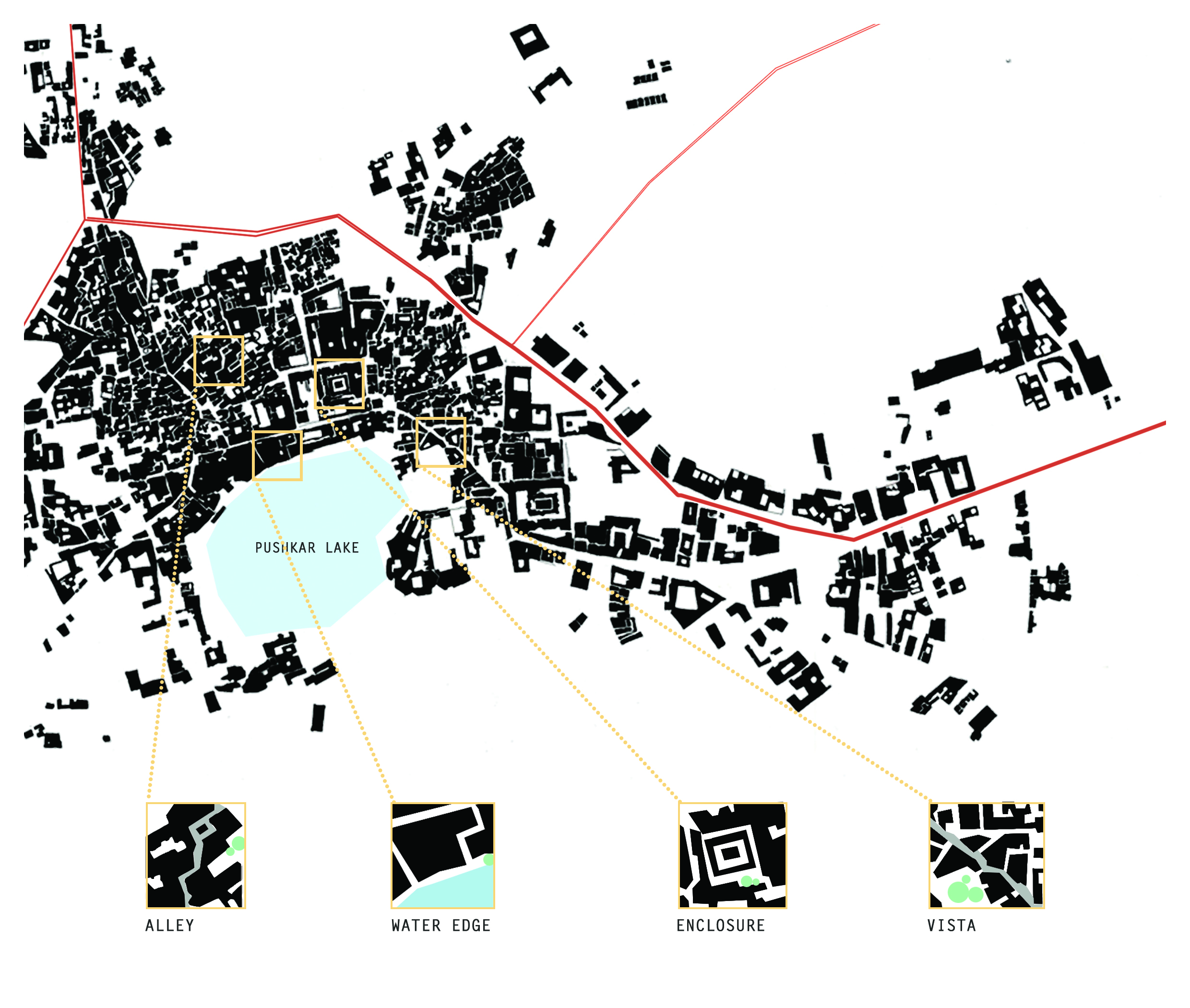
Pushkar in Sanskrit means “blue lotus” flower. Pushkar is a significant pilgrimage site in Rajasthan for the Hindus and Sikhs. Most of the temples are dotted around the lake which is believed to be of existence as far as 2nd century B.C. The urban morphology of the city suggests human-scale volumes along narrows alleys opening into the sacred Pushkar Lake. The city is dotted with havelis, stepwells, ghats and temples with the lake at the heart of it. The city fabric is dense with many intermittent chowks and courtyards which make it porous. It is within this urban morphology that the Neel Manel Resort finds its identity.
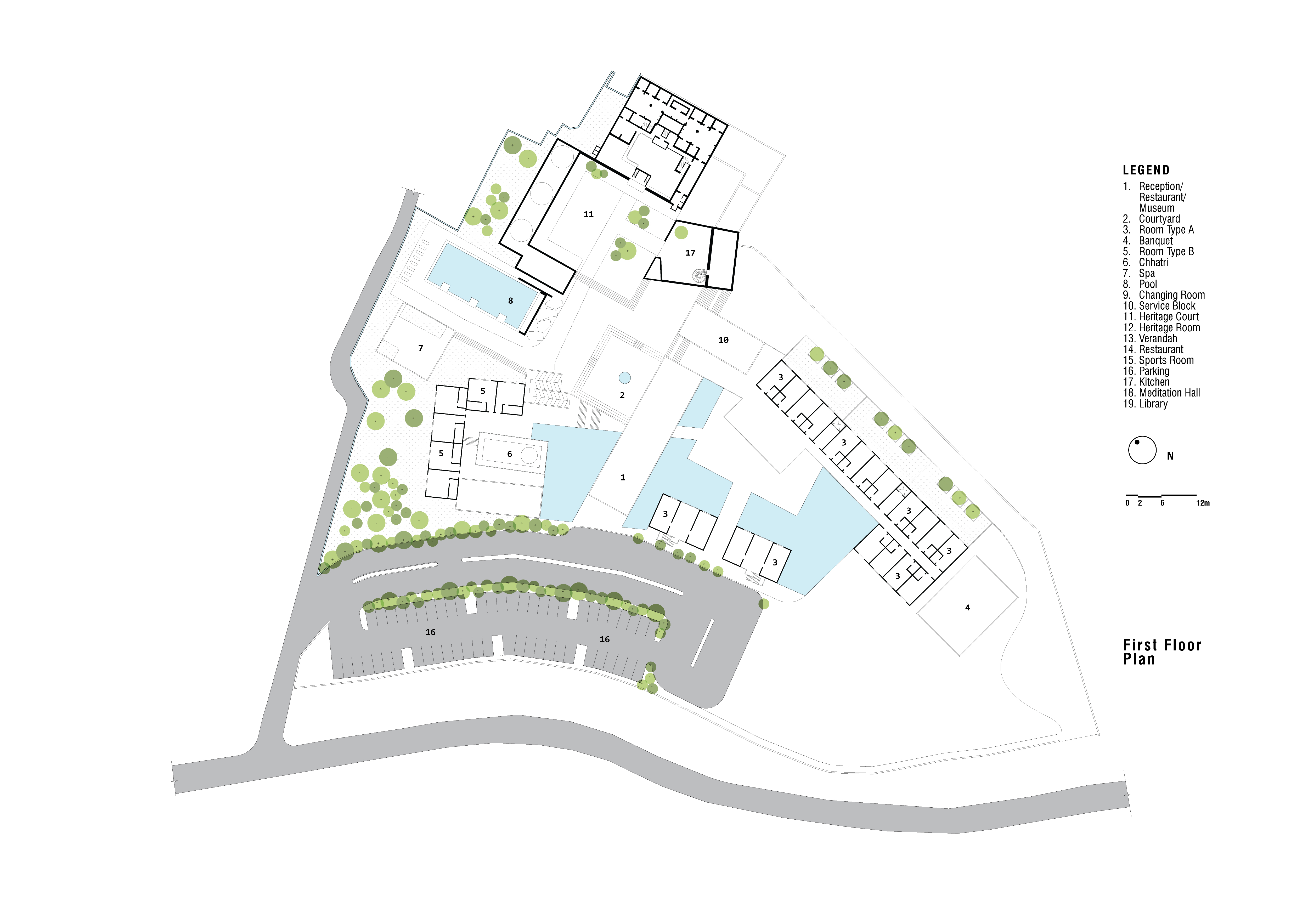
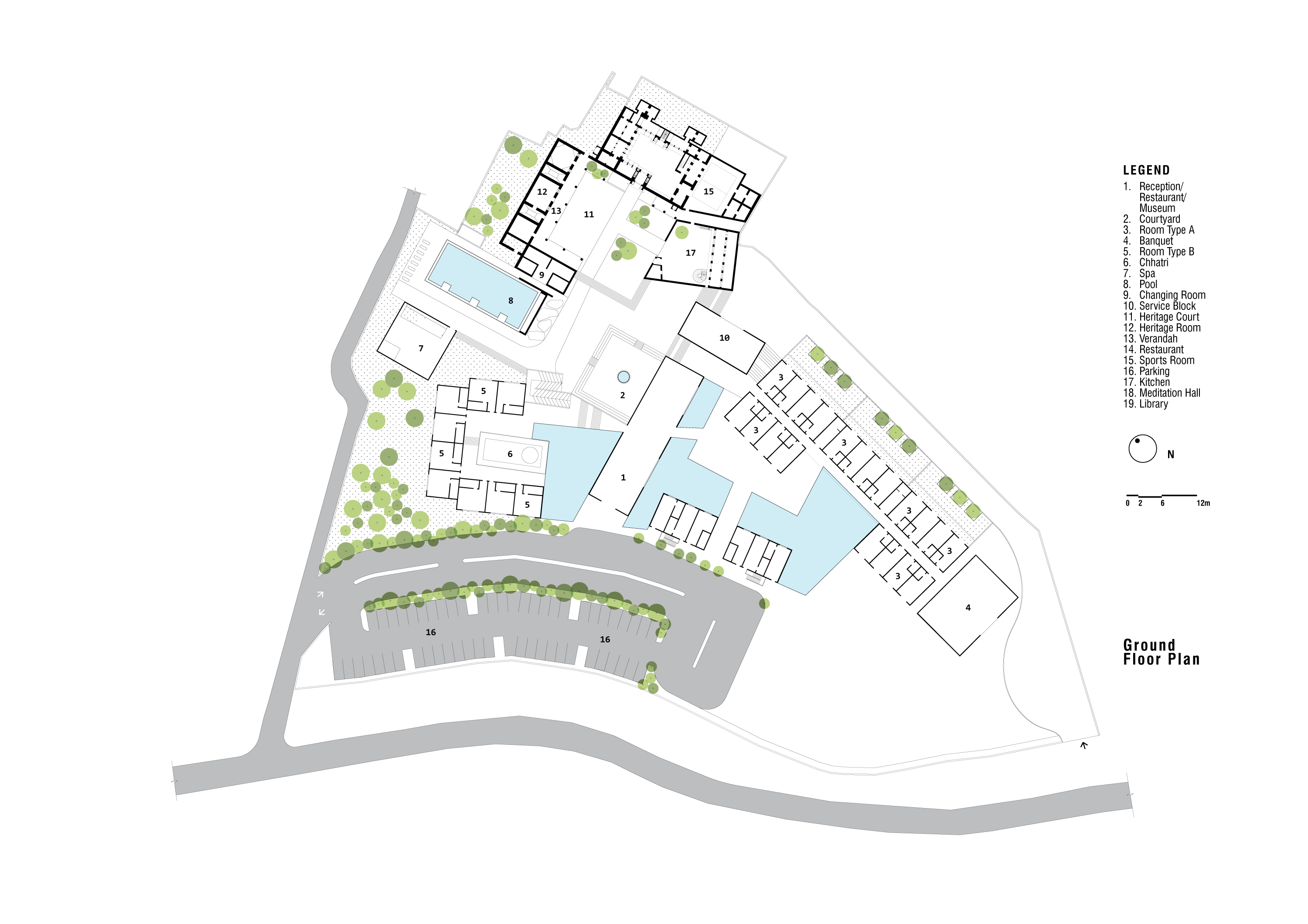
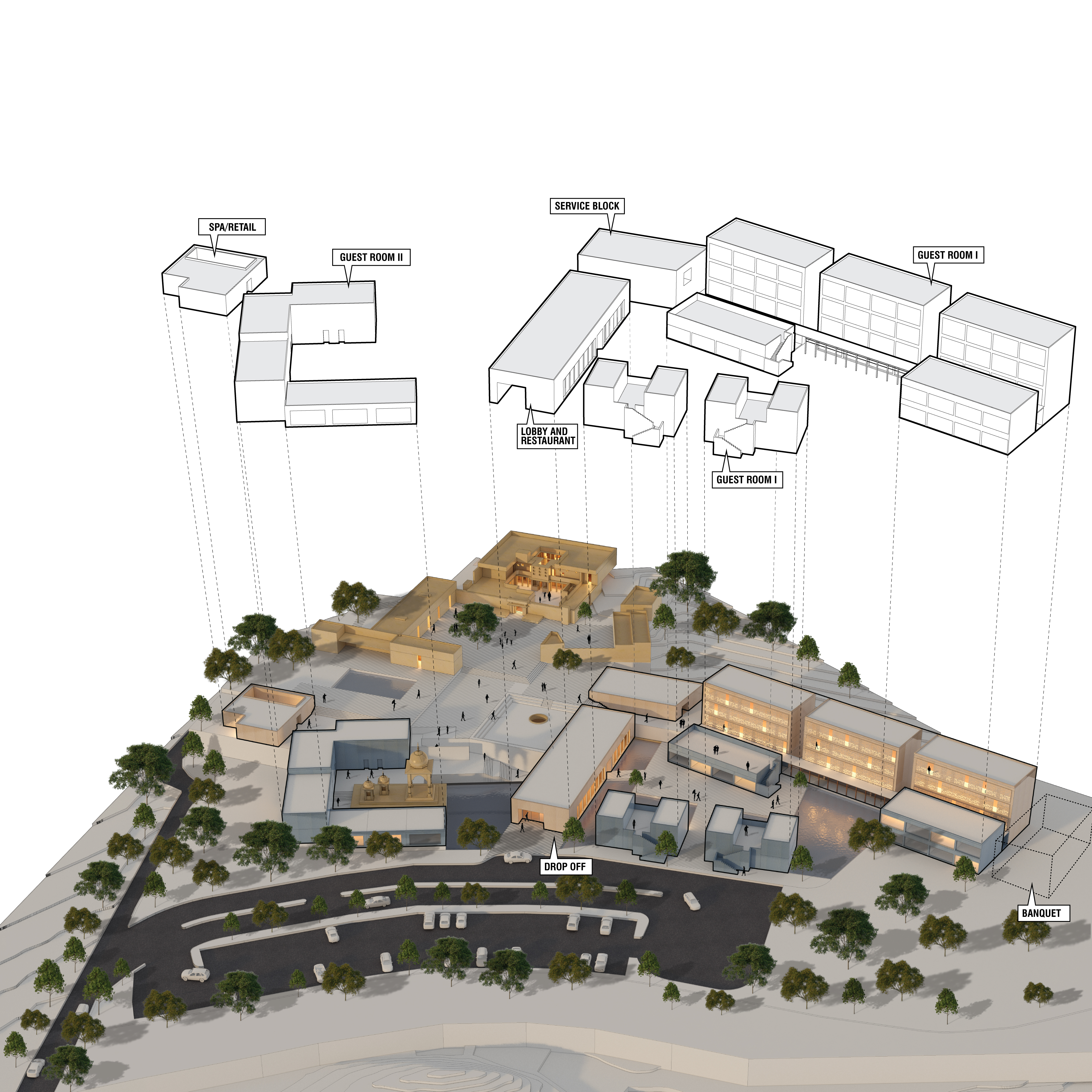
The site is situated 7KM from the railway station and 38KM from the Kishangarh Airport. The site sits within the lap of the Aravalli hills as the road cuts through the rugged landscape to approach Pushkar. The site comprises of 3 main components, Existing, New and Temporary. The existing comprises of heritage structures dotted through the site. The existing building was to be designed as the heritage block consisting of rooms, amenities and restaurants. The chattris dotted through the site along with the baoli where to become moments of pause within the site. The new wing of the resort was a combination of rooms and villas along with retail, spa and specialty restaurants and banquet facilities. The temporary was to take advantage of the 30’ setback from road (which had to be left as a green belt) by creating a banquet space made of tent like structure to facilitate the growing demand of destination weddings.
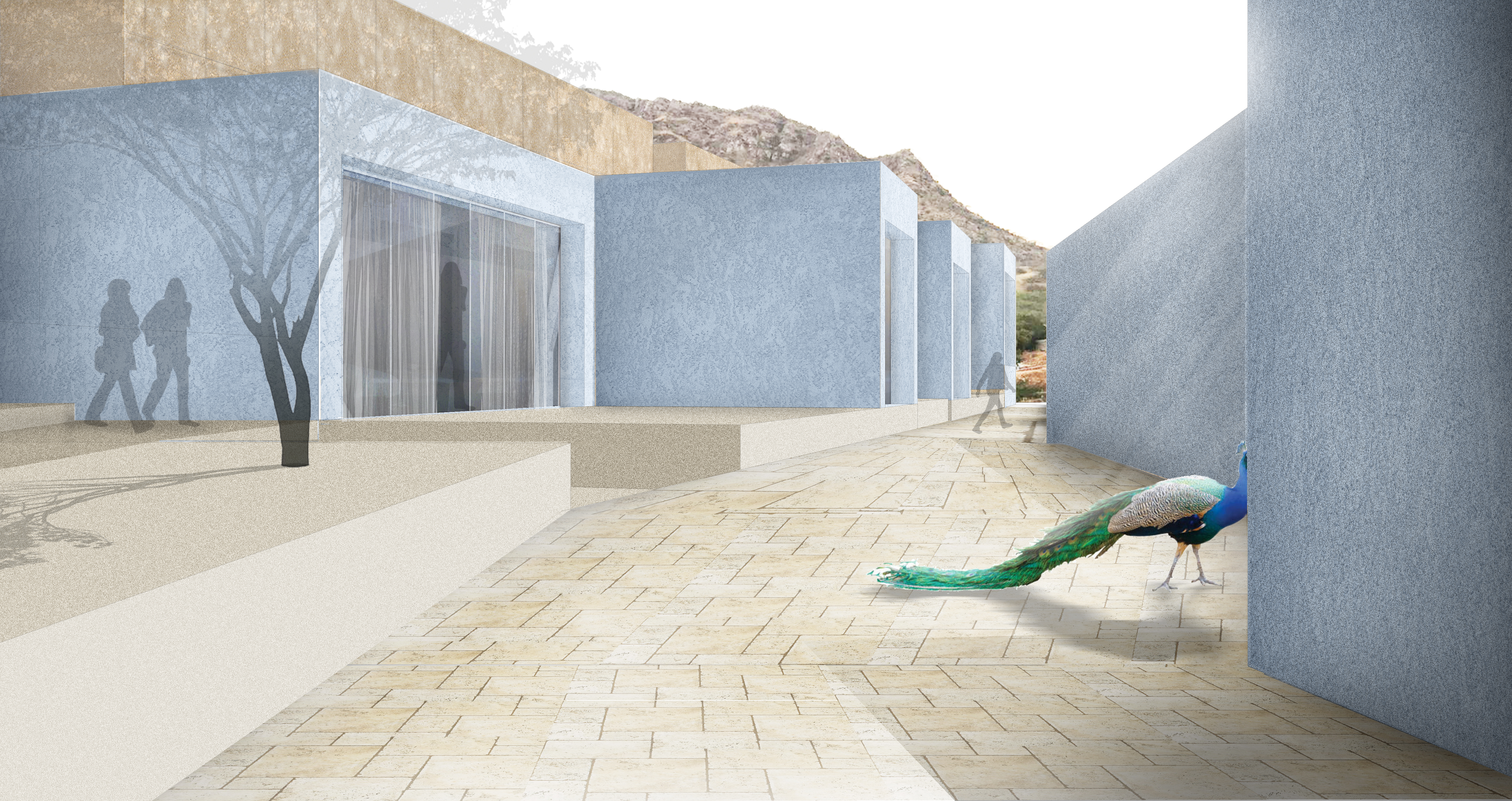
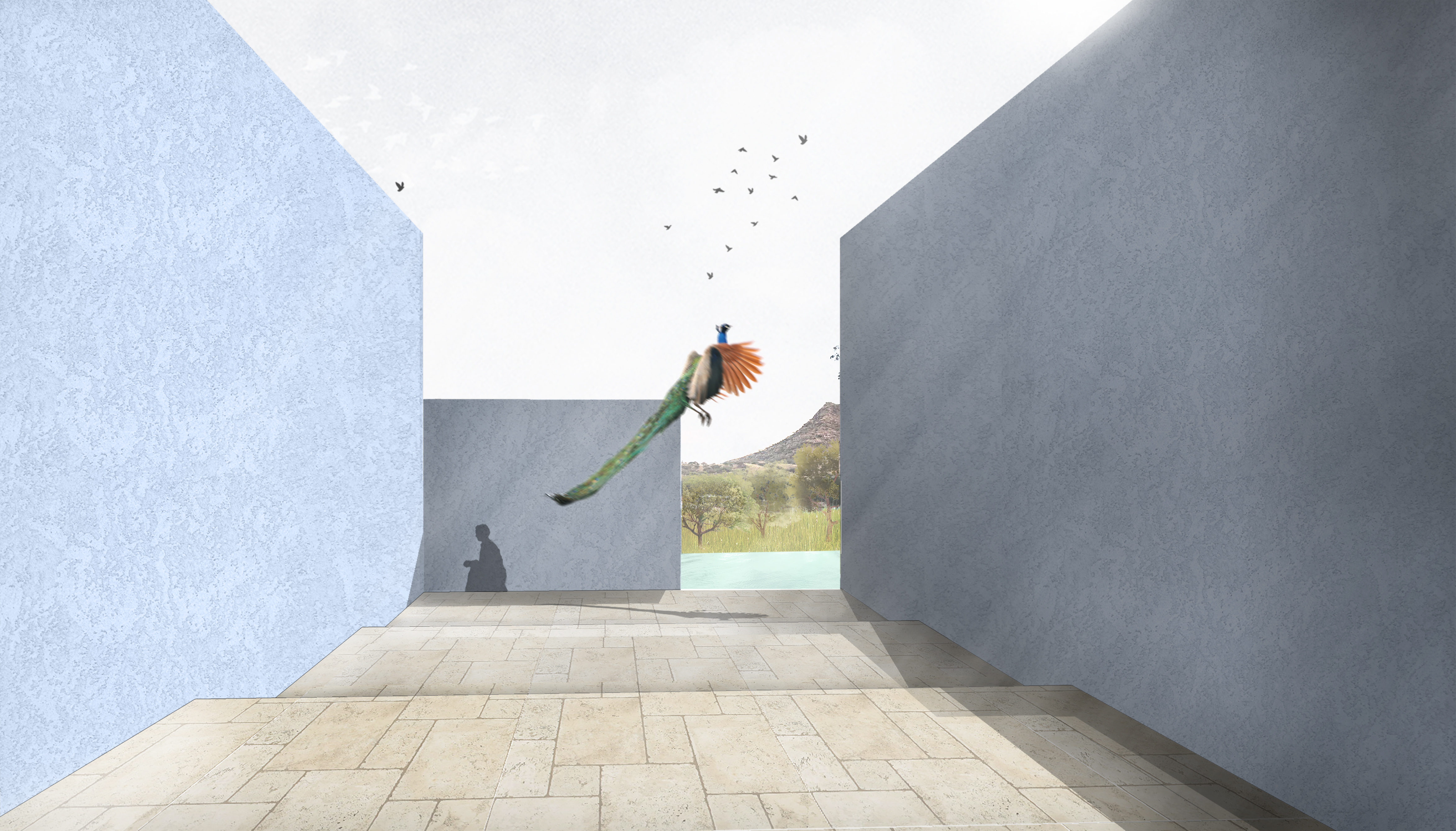
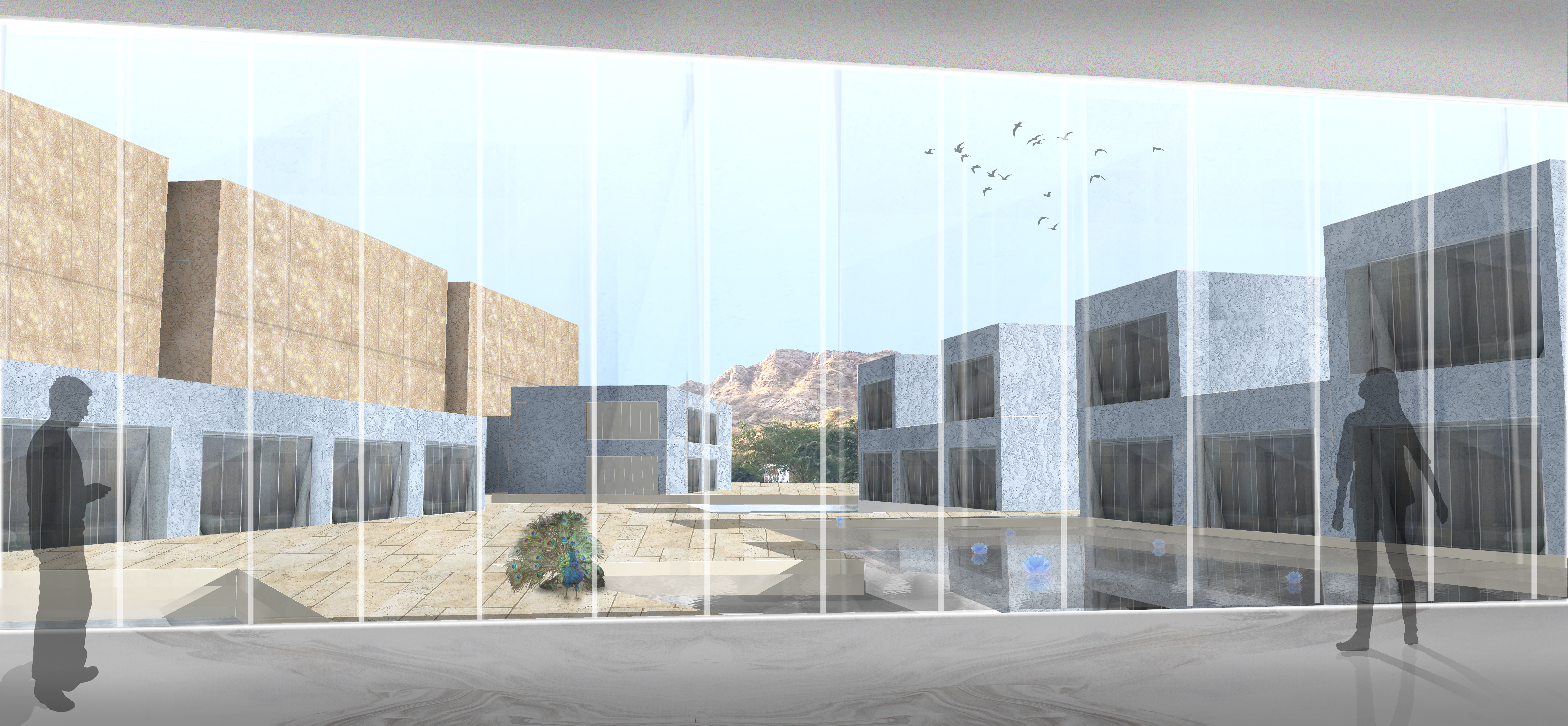
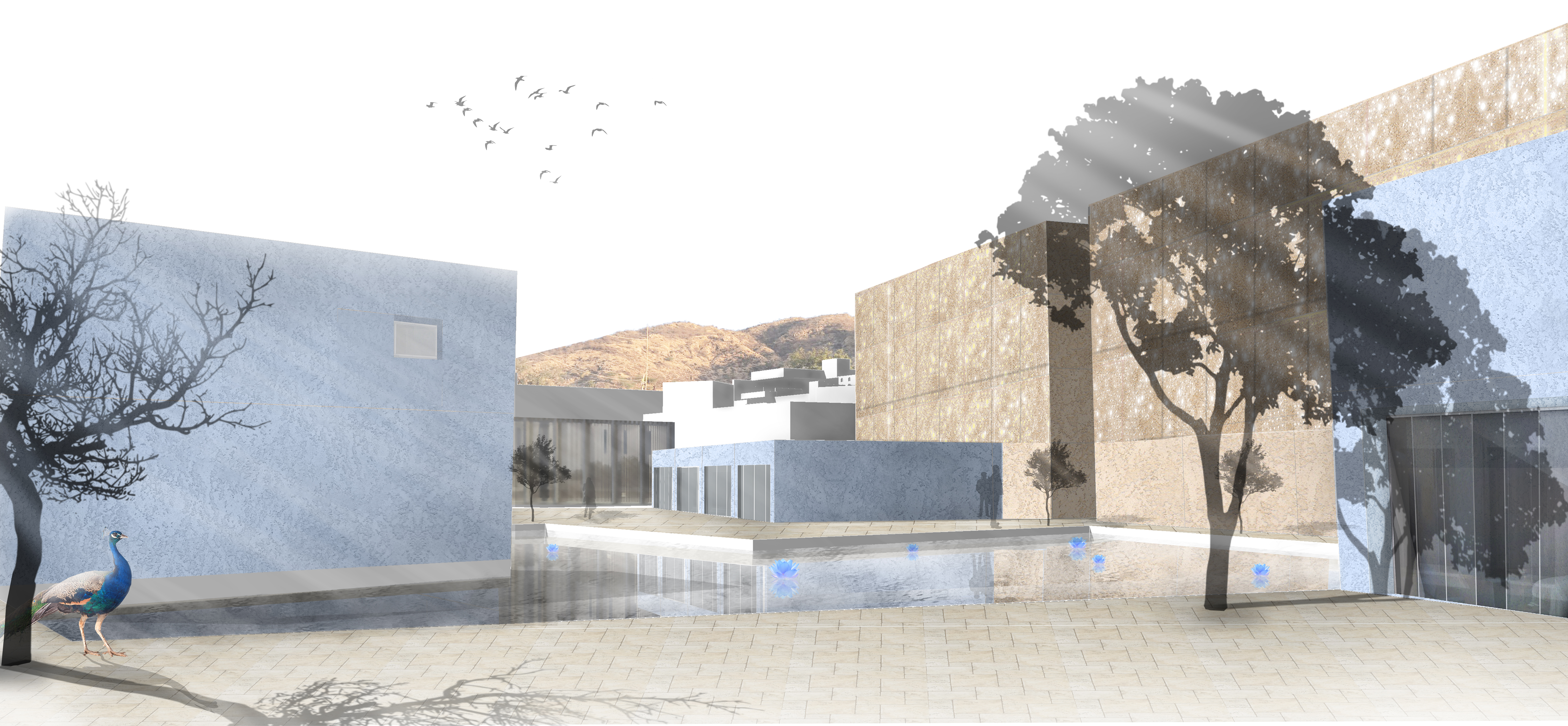
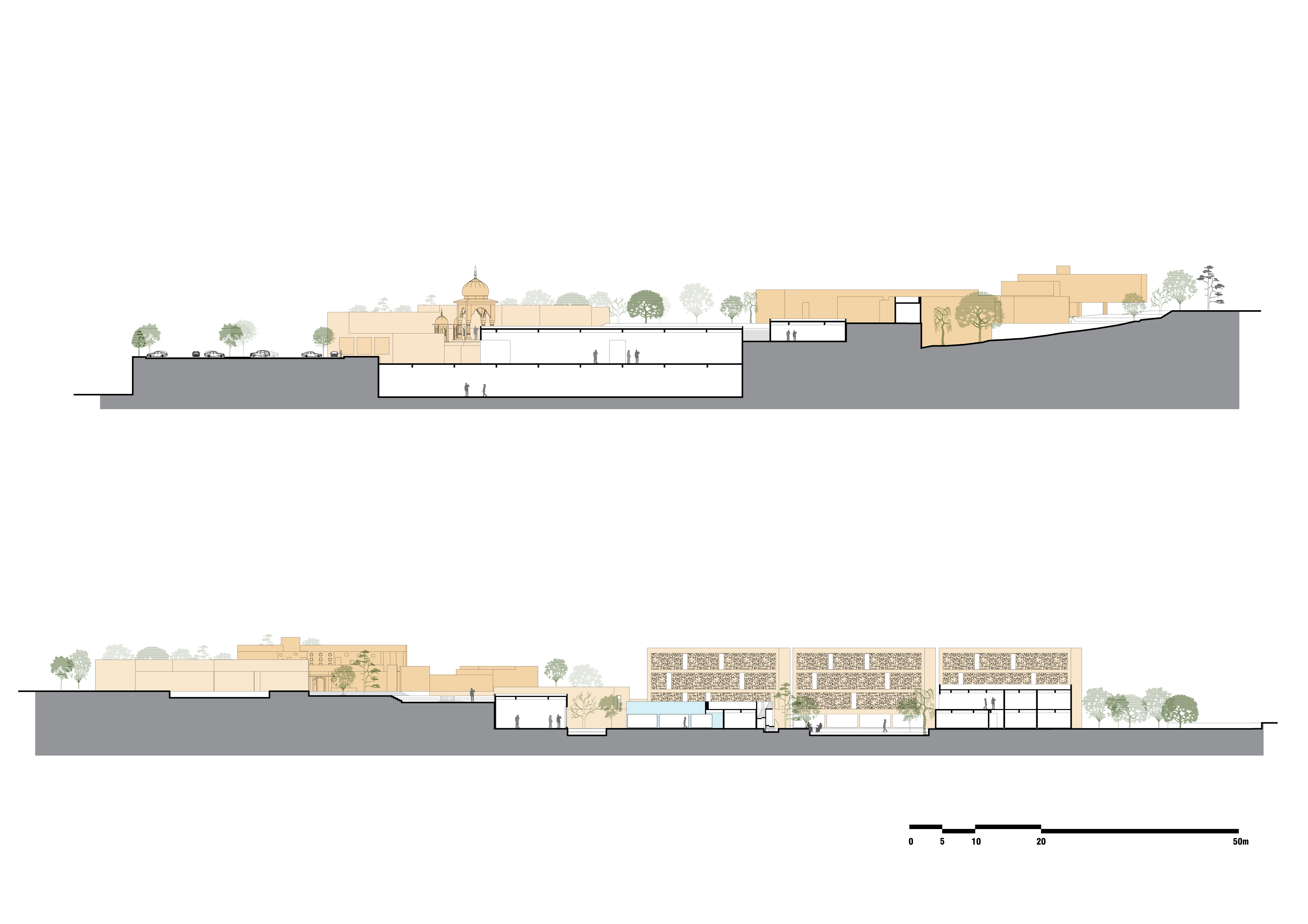
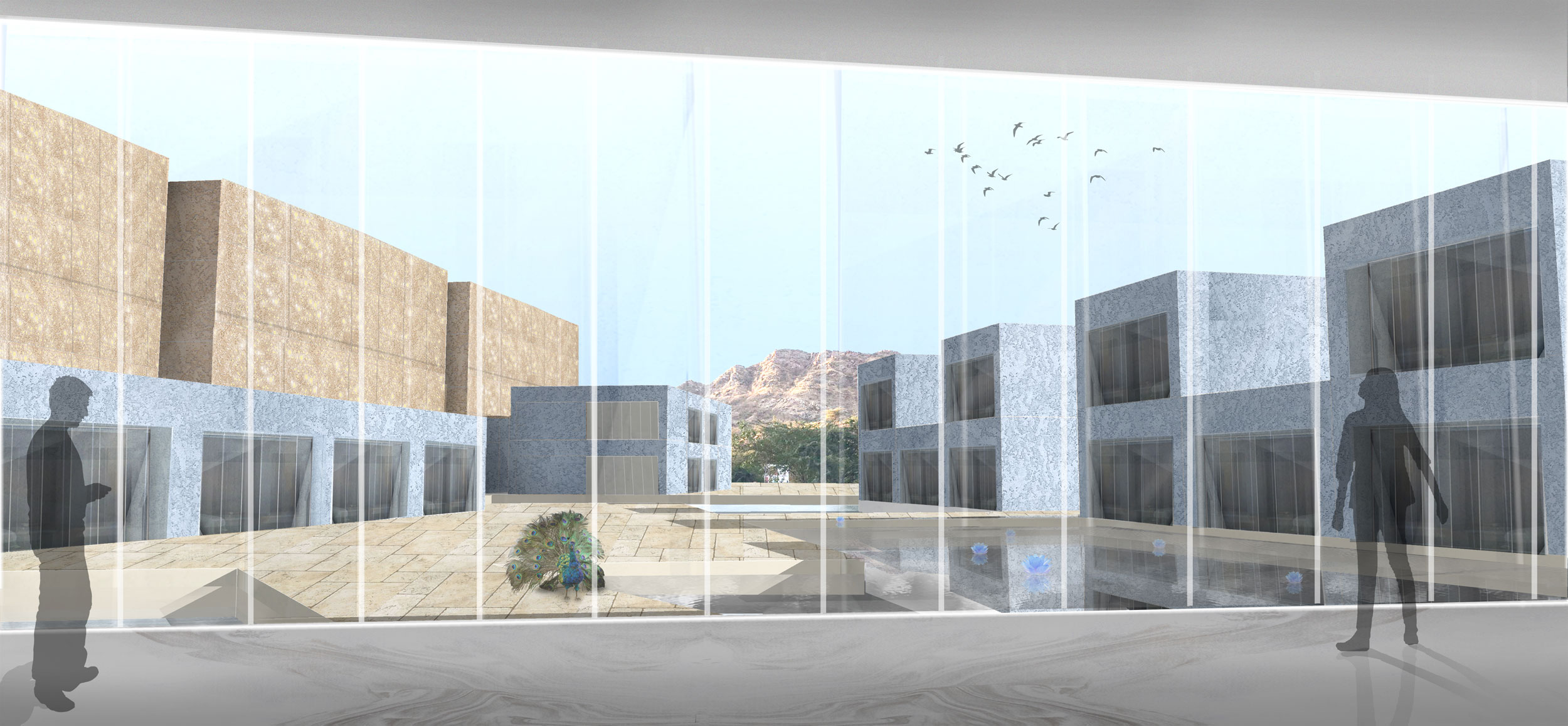
The design manifests itself in upholding the traditional identity of the place while creating a contemporary piece of architecture crucial for a site with such a strong context. Instead of creating a direct entry into the site from the main road, the scenic inner lane marks the entry into the site. The access into the resort is marked by main hotel lobby which is both a reception and a museum (celebrating the histories) leading to the main specialty restaurant. The new wing of the resort is a cluster or different functions dotting around a central lake. The lobby floats in between the lake splitting it into two zones. The layout is designed with the higher built forming a backdrop and the lower built further stepping down towards a proposed lake, tying back to the fabric of the city. The urban and architectural design reiterates the city fabric and the visuals which Pushkar brings forth, allowing for the building to sit well within the context. The terraces evoking the image of Ghats become the vantage points for the lake. Voids between the built allude to the alleys leading to the waters. The built stays permeable and intends to merge with the surroundings. The rear-built of standard rooms stands in sandstone while the front in a pale blue stucco finish toning down the materiality towards the lake. The platforms at the junctions make up for event spaces to liven up as the sun sets. A pale blue stucco finish knits the blocks in tranquility of the lake.
The swimming pool and the spa block acts as a connector to the old and new marking another entry to the site with restricted access. The heritage building unveils itself as one moves up the site. The program is that involving an extension and adaptive reuse of derelict heritage buildings celebrating the ancestral lineage of the client. The Heritage wing houses the heritage rooms looking over a courtyard mimicking the havelis while the restaurant finds its sanctity in the trees of the horse shed. The main house which holds the family deity transforms itself into to a place of learning and meditation. The entire proposal celebrates the past while grounding itself in the fabric of Pushkar.